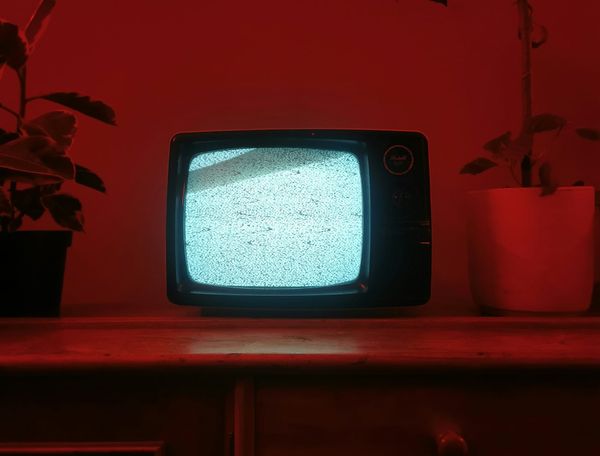
Two hours of The Office in the living room: a bucket of Orville’s buttery popcorn going stale in my lap, the jaunty piano in the theme song filling the house, my mom drifting past and laughing at another Dwight line on her way to the kitchen. By the time four sets of credits have rolled past, my body has left an imprint on the couch. It’s as if I’ve completed hours of work. I stretch my arms, feeling a sense of accomplishment that I’ve not even remotely earned.
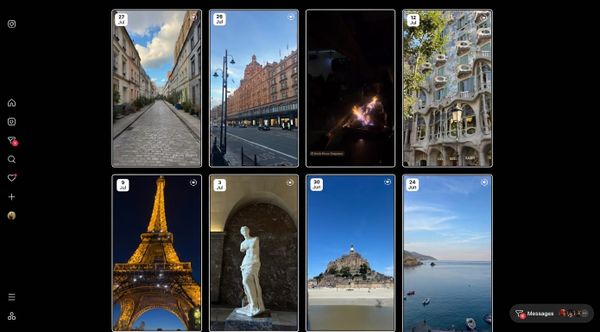
Two hours of TikTok in my room: completely engulfed under my blanket, lying on my side with a pillow between my legs, sporadic laughter only audible to me. By the time my phone screen is too warm for my thumbs to keep swiping and the battery indicator at the top right flashes red, I surface from my bed with aching eyes and a vague sense of shame.
Why does one feel like rest and one like rot? The same two hours have been wasted, and yet they feel wildly different. So much so that, at SAS, phones are completely forbidden past the notorious 8:00 am bell, but a million-dollar movie cinema was recently installed in the Media Lab.As part of our new phone-free policy, our phones were replaced with coloring books and card games, enforced by constant adult supervision. Suddenly, pulling out my phone to order McDonald’s on Grab feels like carrying contraband; I carefully send the Group Order link to my friends with someone on “lookout” for a teacher. This has become a global phenomenon: since January 2026, every secondary school in Singapore has restricted students from using their phones, even during recesses. Around the world, 58% of countries now have national phone bans in schools, up from 24% in 2023. It’s clear that phones are “rot,” but who decided that? The answer seems obvious at first, but the closer I looked, the murkier it got.
The late science-fiction author Douglas Adams had a theory for this. Technology from the first fifteen years of your life feels like “... a natural part of how the world works”; what’s been invented between the ages of fifteen and thirty-five feels exciting; everything after thirty-five “is against the natural order of things.” If we apply this logic to my parents, a TV becomes second nature, while TikTok is completely unnatural and a threat to humanity (even though they’d like to convince everyone they’re “hip and happening”).
Of course, this isn’t new. People have been complaining about the younger generation’s technology for thousands of years. In Plato’s Phaedrus, Socrates claimed that, by writing, men “will be a burden to their fellows” because they are only learning performatively—to look wise rather than actually gain wisdom. In the eighteenth century, critics and religious leaders carped that novels drove women into a state of lunacy. There was even a German word for it—Lesesucht, or reading mania. In the 1950s, hearings were held by the US Senate over whether or not comics caused juvenile delinquency, labeling them as public health problems. In 1961, the Federal Communications Commission Chairman Newton Minow delivered a speech calling TVs a “vast wasteland,” giving official weight to what people were already calling it: the “idiot box” or “boob tube.”
Today, those insults have simply moved down the chain, now aimed toward phones and social media. Parents around the world (including my own) are constantly bombarded with warnings about the dangers of our phones. Jonathan Haidt, the author of the 2024 bestseller The Anxious Generation, fed into this criticism, selling over a million copies worldwide. In the book, he repeatedly describes growing up with iPhones and newer technology as “something inhuman” or as if that technology is from a different world. He refers to Gen Z as “the test subjects for a radical new way of growing up,” as though we were “the first generation to grow up on Mars.” To Haidt, our technology is alien. To fight off this alien invasion, he proposes banning phones in schools, social media before 16, and phones before 14. However, Haidt was sixty when he published the book, well past the age when, by Adams’s theory, new technology starts to feel “against the natural order of things.” My parents, around the same age, have the same instinct. To them, the root of all problems is my phone: whether it’s the reason for my toothache or a broken bone, it’s “always the damn phone.”
Haidt and my parents aren’t anomalies, though. They align directly with Douglas Adams’s theory about age and the interpretation of technology, and seemingly every generation has followed the same pattern. Psychologist Amy Orben calls this the “Sisyphean cycle of technology panics.” Like Sisyphus, condemned to push a boulder up a hill only to watch it roll down again, each generation of adults pushes the same fear uphill until it rolls back down for the next generation to pick up.
But one boulder never got pushed back up. Somewhere along the way, the idiot box got a glow-up.
Today, nobody warns that Friends reruns are rotting our brains. TV has become “a comfort watch” or self-care, even. My parents, who grew up being told that the TV would give them “square eyes,” now recommend shows to me. So why did we forgive TVs? It wasn’t the screen itself: if anything, screens got bigger, brighter, and far more bingeable. Instead, it really boils down to who does the judging. The kids who were raised on the idiot box grew up and had kids of their own. They simply found a newer screen to worry about. Just as Adams predicted, TV went from unnatural to normal the moment its generation took charge.
If the verdict on TV changed because a new set of judges grew up, it’s worth asking who’s really judging now, and whether they’ve earned the right. According to a 2024 Pew Research Center survey, 47% of American parents said they spend too much time on their phones, while 38% of teens said the same. In an earlier Pew survey from 2018, parents were nearly twice as likely as teens to say their phones often distracted them at work or school. Half of teens said their parents get distracted by their phones in the middle of conversations. At the dinner table, my brother and I keep a running count of how many times we’ve been “left on heard” by our parents; my highest record for any given month since we started is 12 in September. And yet nobody has written a bestseller called The Anxious Parent Generation. The panic only flows downward; only whoever is old enough to set the rules gets to decide which habits count as rot. Conveniently, their own habits never seem to make the list.
The strangest part is that we’ve started criticizing ourselves, doing their job for them. Consider what we use as terms for rest: bed-rotting, doomscrolling, brain rot. Our parents’ generation was called “couch potatoes,” which is lazy but still relatively harmless. We describe ourselves as rotting, creating the image of quite literally decomposing in our beds.
While we may joke about it, that language is detrimental. In a 2025 study, researchers Ian Anderson and Wendy Wood found that while 18% of Instagram users believed they were addicted, only 2% actually showed signs of addiction risk. Worse, when people were prompted to think of their scrolling as an addiction, they felt less able to control it and blamed themselves more, making the habit harder to break.
To be fair, addictive design is real, and the critics aren’t necessarily wrong about some of the harms of social media. A 2026 European Parliament briefing on addictive design confirmed that “infinite scroll, autoplay, push notifications, and highly personalized recommender systems” are deliberately used to keep us on our screens for as long as possible. Additionally, psychologist Gloria Mark has found that the average time people can focus on one screen before switching has fallen from roughly two and a half minutes in 2004 to forty-seven seconds today, a sign of shrinking attention spans. In fact, if you watch me sitting on the MRT, you might glance over and see the glowing light of my phone reflected onto my face with my eyes widened, staring at the screen in front of me. As you look closer, you’ll notice my thumb pressed down against the side of my screen as I watch 15-second-long TikToks at 2X speed. I do this to prevent losing interest… on a 15-second video.
So yes, phones are built to hook our attention, and mine is clearly hooked. But the panic claims that phones are “rotting” and ruining teenagers’ minds. On that claim, the evidence is thin. In a review of The Anxious Generation in Nature, psychologist Candice Odgers argued that Haidt’s claim that phones caused the teen mental health crisis isn’t supported by research. When Amy Orben and Andrew Przybylski analyzed data from hundreds of thousands of adolescents in 2019, they found that the link between technology use and well-being was incredibly small; it was roughly as strong as the link between well-being and eating potatoes. I don’t hear anyone banning potatoes in schools.
Part of the reason phones and social media face sharper backlash than past technologies comes down to privacy. No one else can see everything you do on your phone. Unlike bingeing The Office in my living room for everyone to glance over at, the phone screen is built for one person, held inches away from one face. Adults are clearly trying to see in: according to Pew, most parents have checked their teen’s browsing history or social media profile, and nearly half have gone through their teen’s messages. In middle school, a friend of mine was so terrified of his parents’ random phone checks that he put all his WhatsApp chats in the archived folder.
For the first time, the people who make the rules can’t watch us follow them.
Read that way, Haidt’s solutions seem to be desperate attempts to regain sight. The panic is clearly loudest when adult control is the weakest.
When SAS implemented the phone ban, nobody asked us why we reach for our phones, or what we find there. Instead, the answer was to simply take them away. Ironically, we’re the only people in this debate who can actually see what’s on our screens, and yet we’re the only ones nobody consulted. While I understand the impulse to take phones away, I can’t help but notice that we’ve been here before. Every generation of adults has looked at the newest technology and seen “rot,” until their kids grew up and forgave it. What makes this round different is that the phone is a rabbit hole built for one.
Tonight, I’ll probably end up back under my blanket, door shut, phone glowing. Maybe I’ll still feel that flicker of guilt. But I’m starting to question how much of that guilt is mine. I also know that I don’t have to keep it. Some rabbit holes are worth falling into, and I’d like to decide which ones for myself.