
That one penguin is everywhere… but why?
“But one of them caught our eye—the one in the center. He would neither go towards the feeding grounds at the edge of the ice nor return to the colony. Shortly afterwards, we saw him heading straight towards the mountains, some 70 kilometers away. Dr. Ainley explained that even if we caught him and brought him back to the colony, he would immediately head right back for the mountains…
…But why?”
Those were the words of German filmmaker Werner Herzog in his 2007 documentary “Encounters at the End of the World.” In it, he narrates the seemingly suicidal defection of a lone penguin from its colony. At the start of 2026, the internet nurtured this fascinating clip, deeming the nihilistic protagonist somehow motivational. The penguin’s position in meme culture holds a unique relevance in its temporal context, and certain coincidences compel me to believe that this is one of the greatest memes to have ever existed.
Memes are fundamentally evaluated by their ability to spread; it’s in the etymology. Sometimes we judge memes for being “unfunny” or “brainrot,” but neither of those factors contributed to the success of past memes. It was more so their widespread presence in places we didn’t expect them that drew laughter. Nevertheless, throughout 2025, the generations who grew up with meme culture wept at the idea of a “meme drought.” They feared that memes were being taken over by Gen Alpha, defined by AI slop like Italian Brainrot.
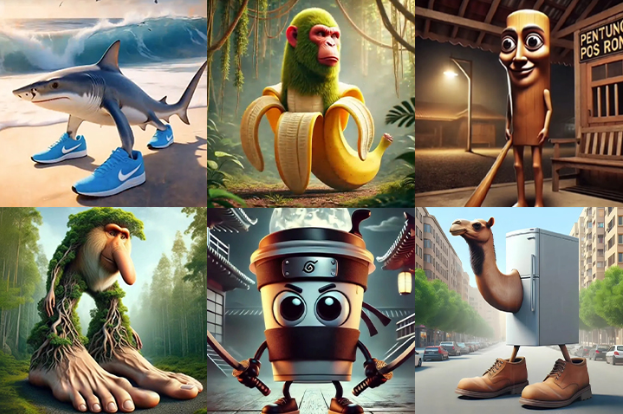
While the little characters did wonders in terms of widespreadness, their societal value was no more than an annoying commercial jingle stuck in your head. Older generations tried to fight back with the great meme reset, a mutual agreement to start posting memes from a decade ago. However, even before the set start date of Jan 1, 2026, sociological analyses made the rounds online of why such a solution would never work. In other words, we desperately needed whatever new meme would kick off 2026 to be a saviour.
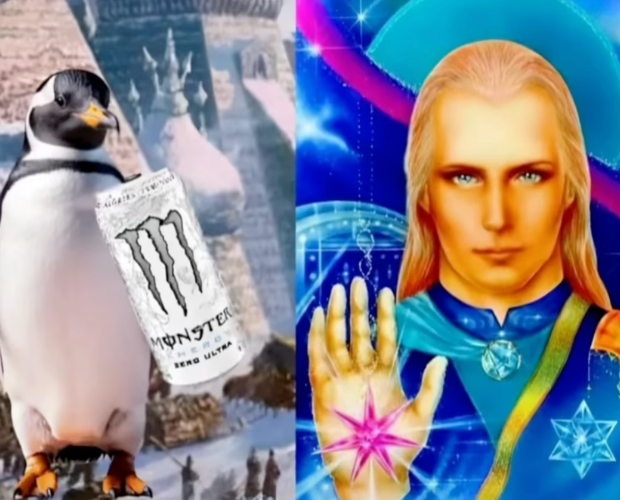
The nihilistic penguin’s influence wasn’t entirely its own. It acted as a convergence of several recent memes, drawing on their clout. The Antarctic environment made way for online geniuses to blend the penguin’s lore with that of Agartha, a legendary kingdom beyond the ice wall, which is at the core of hollow earth conspiracies. That meme is in turn associated with Monster Energy Zero Ultra, colloquially referred to as White Monster, which, in lore, gave characters the necessary Aryan features to enter Agartha.
Lastly, through the great meme reel’s collective recall, people were able to link the penguin to another creature:
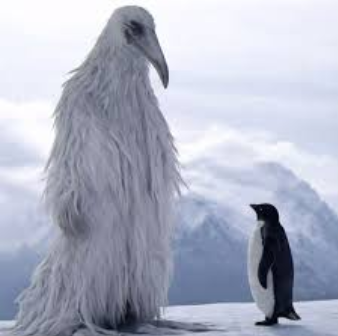
On September 12, 2023, digital artist Dre VFX released an AI-generated video of a tall, ghostly avian, reminiscent of large birds like the shoebill or the maribou stork. He called his new cryptid the Opium Bird. The internet soon jumped on the clip and horror stories of the eerie creature. ” This was in part due to its trailblazing use of generative AI in meme culture, as well as a rising respect for the arcane—as seen by captions like “This is a new meme from 2027. You wouldn’t understand.” However, like the majority of internet memes, the Opium Bird was soon forgotten…until the aforementioned Great Meme Reset. Users quickly recognized the Opium Bird’s white coat as a parallel to Agarthan blonde hair. Soon, the narrative became that the penguin was walking towards the mountains in search of Agartha, and when he’d eventually arrive, presumably in 2027, he would don the Agarthan features and become the Opium Bird.
Importantly, never before has a meme held such cohesive and extensive lore in conjunction with other memes from the past and present. Coming out of the 2025 “meme drought,” the penguin employed the nostalgia factor underlining the short-lived great meme reset by linking back to pre-established memes, while also putting something fresh on the table.
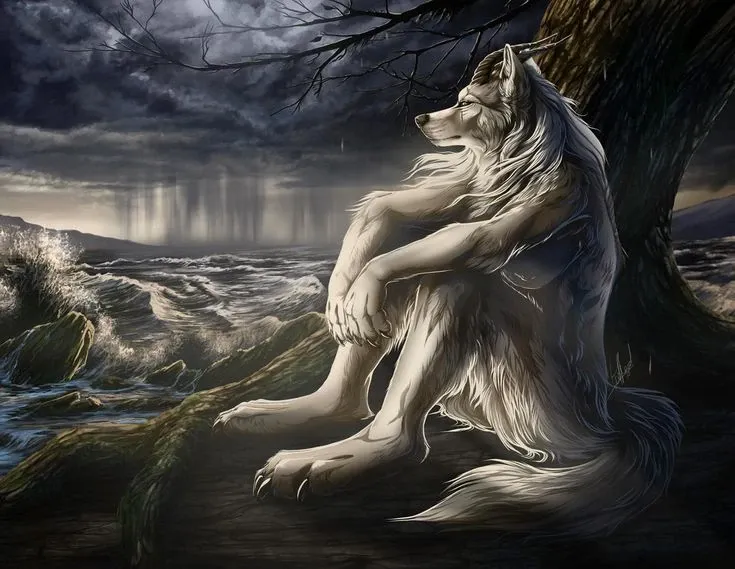
The existence of the meme aside, the penguin holds its own in representing a message important to contemporaries. Over the past few years, the internet has gradually pinned nonchalance as a virtue. Some began identifying themselves with the lone mavericks of the animal kingdom, the wolf and the lion.
Others took an opposite approach to be the likable, carefree “nice guy,” as exemplified by the Chill Guy meme in 2024.
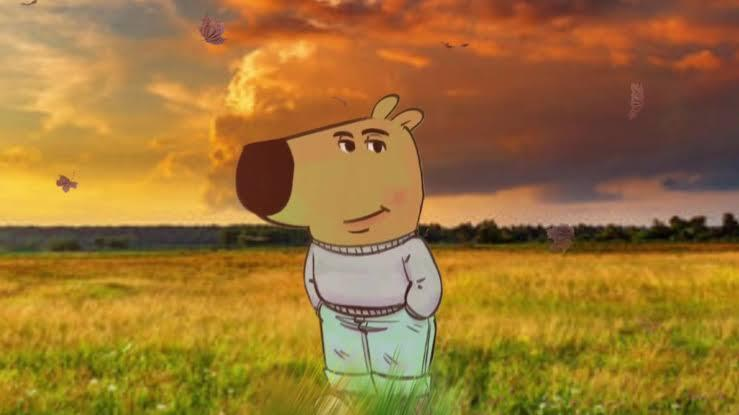
Regardless of method, people saw appeal in being lonesome and dismissive of the society around them. For these groups, the penguin, who literally leaves his colony to pursue his own, mysterious goals, represented their ideals perfectly. It should be no one’s surprise that the penguin gained popularity, joining the ranks of the symbols of nonchalance.
From this, the penguin might seem dark and edgy, but he comes with a positive message as well. Meme analysis channel “Lessons in Meme Culture” puts it best: “the penguin is motivational.” His rejection of society reflects our desire to be able to forge our own path in spite of the pressures around us. Regardless of what you want the penguin to represent, it’s undeniable that a wide range of audience members from both these extremes—the nonchalant and the motivated—were able to find solace with the creature.
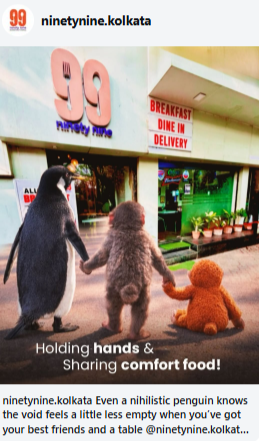
Furthermore, the penguin became incredibly prevalent in not only commercial but also political parodies. It’s not uncommon for popular memes to grow further in popularity through parodies, both witty and nonsensical. As mentioned earlier, it’s one of the aspects that gives memes their essential appeal. Granted, while it’s seen quite often with internet trends, only a few memes get the honor of making it onto official company accounts. The nihilistic penguin made that list, with many companies claiming the penguin’s destination to be something related to their product:
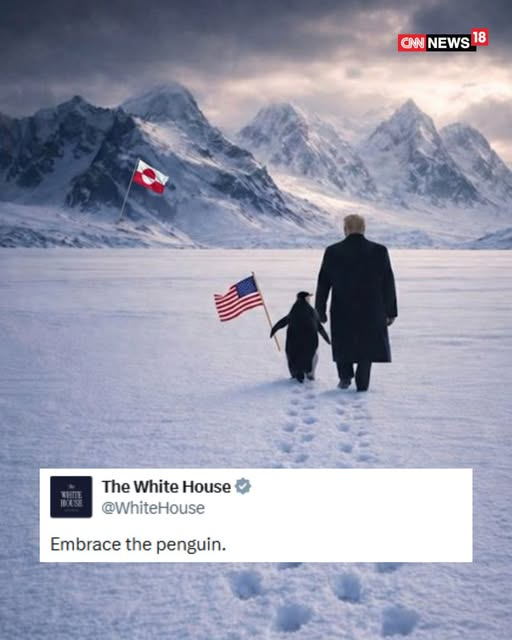
It became so undeniably big in online culture that even the White House made its contribution, posting Trump walking with the Penguin with a flag of Greenland in the distance:
The @ninetynine.kolkata example shown above also features an even more recent meme, the Punch Monkey, another emotionally resounding animal. It goes to show that the lore of the penguin is still actively being developed, and that even as the months go by, people are still holding onto the meme that spearheaded 2026.
The penguin doesn’t make fun of any online figures. It isn’t overreliant on short attention spans and flashy images. It doesn’t fall on a crutch of being meta or absurd. It’s an innocent clip being brought back to be reflected on by the internet collectively, unknowingly helping us answer the looming meme culture identity crisis that 2025 caused. It is my hope that if the internet ever decides again that it’s descended too far, and another “meme reset” happens 10 years from now, we will look 70 kilometers back at the nihilistic penguin with fond memories.