Why Is Everyone Watching China’s Beautiful Disaster?
Have you seen a cow stand on two legs with human hands, its mouth mouthing some broken Chinese? Two people made Niu Lai and in its first nine days, only 236 people watched it. It is now the most profitable film ever released, and the reason is a lot larger than just being a viral sensation.
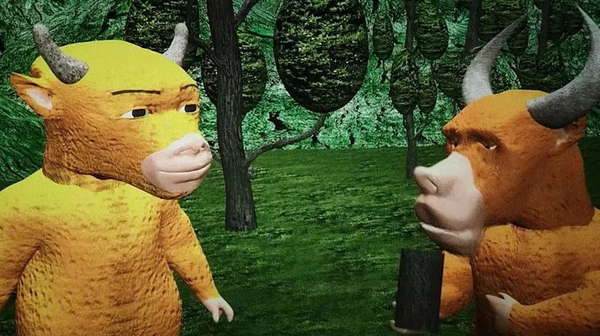
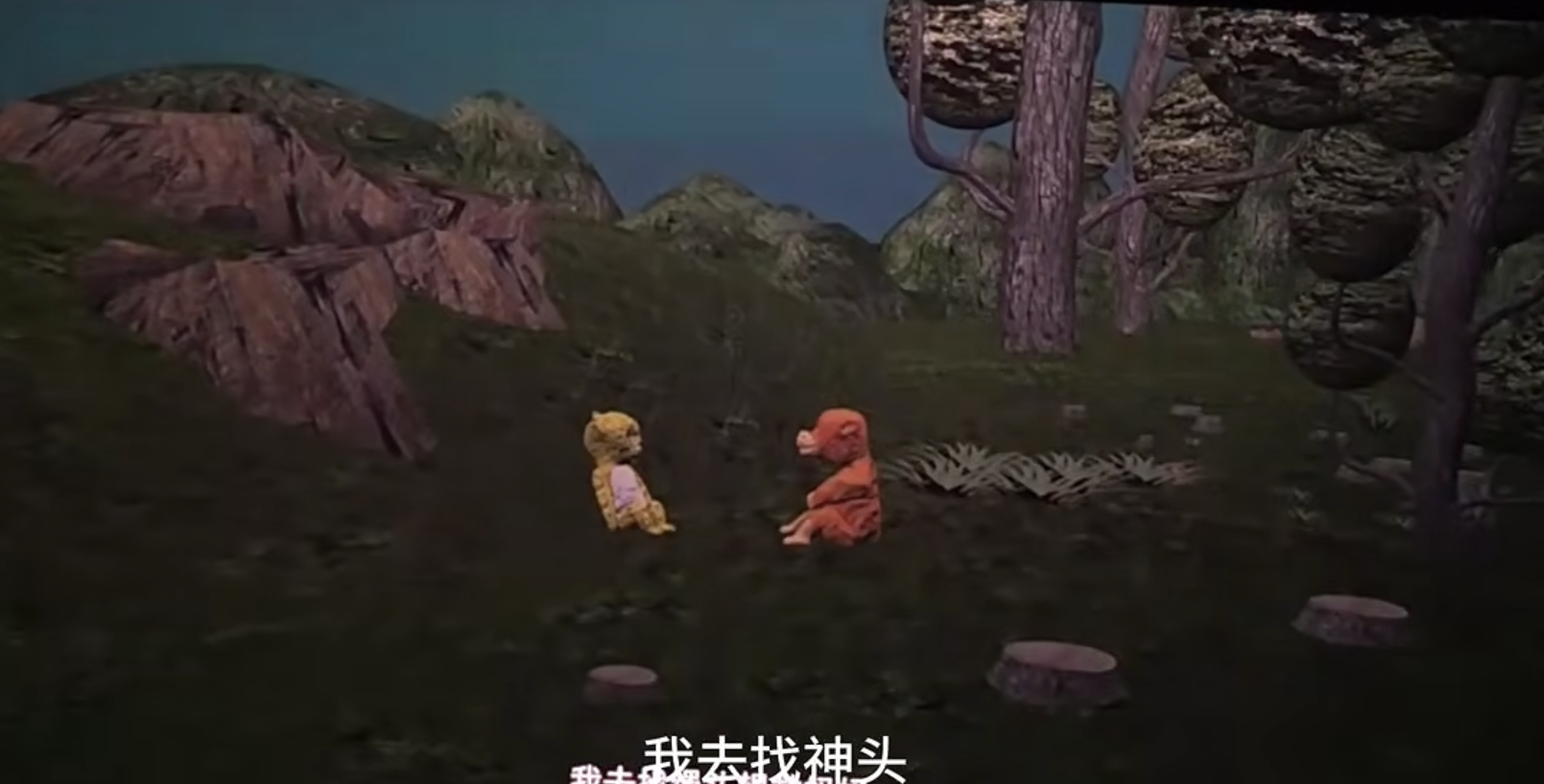
I’ve never been high, but if I were, I feel like the world would look like the movie Niu Lai. The grass would look like a flat PNG. I’d see tree leaves as spheres of noisy greens, and I’d probably be jump-scared when I see a cow approaching me standing on two legs with human hands. It would have eyebrows, a mouth, some sharp edges on its body, and walk with a little bit of sass. The world would look like a poorly rendered early 2000s video game: pixelated and depthless textures, and animals speaking Chinese through an out of sync mouth. (If you’ve been high before, let me know if I’m right.)
Somewhere out there, someone’s spent money to see what the feeling is like. I just needed to watch Niu Lai, an eighty-six-minute Chinese animated film made by a son and mother. Just recently, it’s been marked as the most profitable movie based on return on investment. With a gross of $4 million from a $200 budget, it has dethroned recent hit Obsession. So here’s my experience. Here’s my experience of watching the newest most profitable movie in the world.
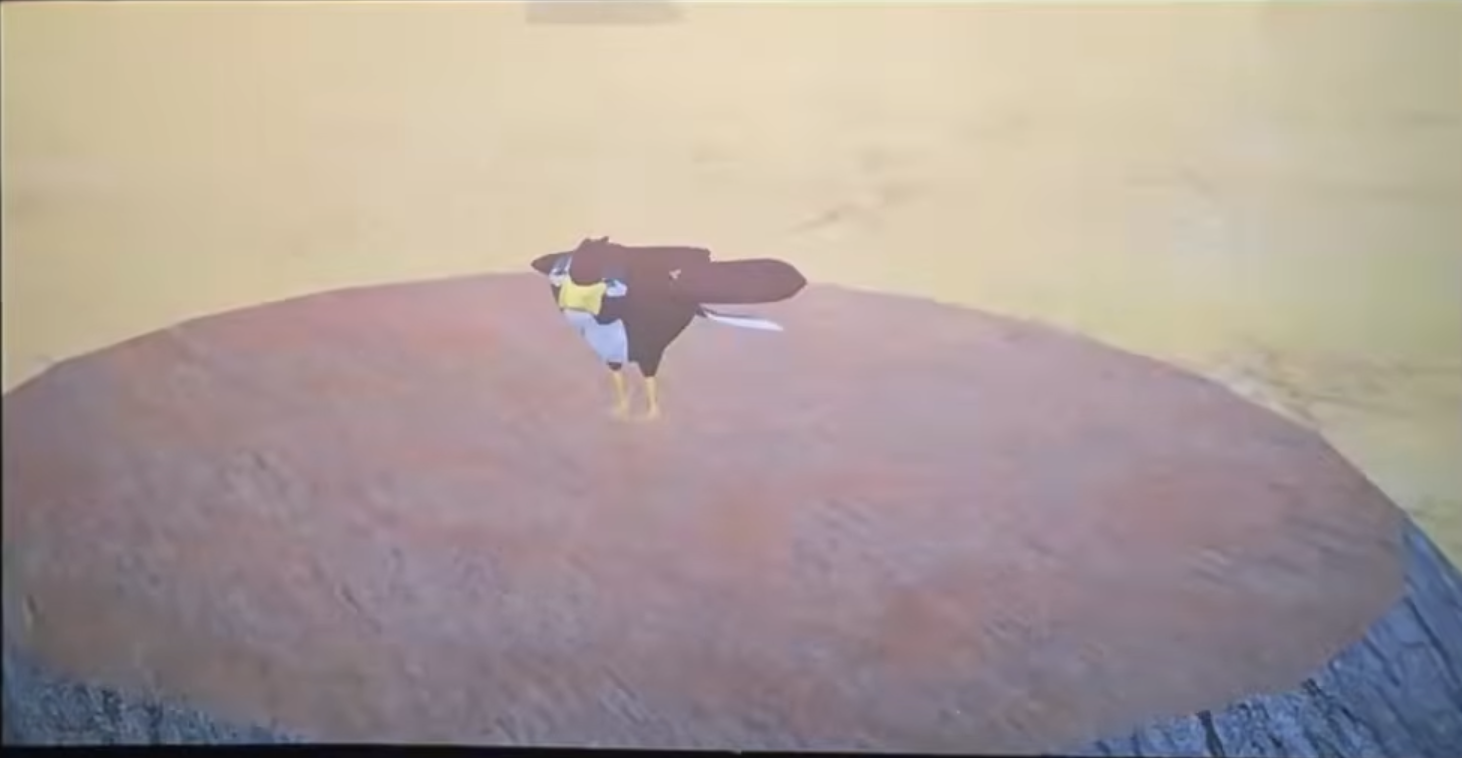
I sat at my desk and typed in “Niu Lai English” into the YouTube search bar. I clicked on the eighty-six-minute video of a dude filming the entire movie on his phone. On the very low resolution and shaky recording, I made out an oddly shaped bird in a sandstorm yelling something in Chinese.
“I’ve been flying for so long,” I translated the bird saying in Chinese. Surprisingly, I could understand about ninety percent of the movie with my mediocre Chinese skills. I don’t know if that says more about the movie’s script or my Chinese progression.
The movie follows a newborn cow called Niu Lai, his mom, and their migrating herd. There was also a random bird. The movie was situated in roughly four scenes, a couple of them looking suspiciously similar. They were filled with flat colors and simple shapes that tried to resemble a background. The animations made the animals’ bodies disfigured. There was no harmony in any movement. Altogether, it looked like a Roblox game designed by a kid who didn’t know how to properly texture or design.
Niu Lai befriends a leopard who his mom believes is dangerous because he’s a leopard. The herd faces multiple attacks, but ultimately, it’s the friendship formed between the cow and the leopard that saves them. I then started holding down my space bar periodically like I was doomscrolling at double speed. The messages that the movie delivered were, to be put simply, Chinese—Chinese as in messages that would be taught in children’s stories and primary schools, things like courage, family, friendship, and bravery. While I think the message that Niu Lai tried to convey was basic, the overall symbol it represents in China and our world couldn’t be stronger.
If you think western social media is filled with perfectionism and is perpetuating the young mental health crisis, you have not seen Chinese social media. On an average day on Xiaohongshu (Chinese Instagram) or Douyin (Chinese TikTok), you’ll be bombarded with a collage of perfection: weirdly tall and skinny Chinese influencers, food that makes you starve and salivate, and photos of people in layers of clothing acting like a goddess at some Chinese garden down the street. The social media craze in China has gotten so bad that everywhere is filled with a plethora of photo taking props. When I recently went to a salt lake in China, the vastness of the land was polluted with colorful emojis, text, and signs just for social media. It’s disgusting.
It’s not just Chinese social media that perpetuates perfectionism. The entire country is set up in a system of perfectionism. Outsiders may look at China and see that Lunar New Year humanoid dance with backflips and kungfu or the largest high speed railway network in the world. But behind all the so-called perfection lies a system of human exploitation and oppression. The Chinese youth are going through the highest unemployment since Beijing changed how it counts, a stalling economy, and government censorship that erased 76 million posts and 1.35 billion accounts over two years. From social media broadcasting standards, to the facade of perfection, it feels fitting that the imperfect movie Niu Lai is the thing that connects so many of them together.
Niu Lai feels like a wild point of happiness and connection for the Chinese youth. If perfection and superficiality is what’s bringing them down, Niu Lai is their remedy—a movie proudly flawed and real. It shows that you can be imperfect and successful. You can be authentic.
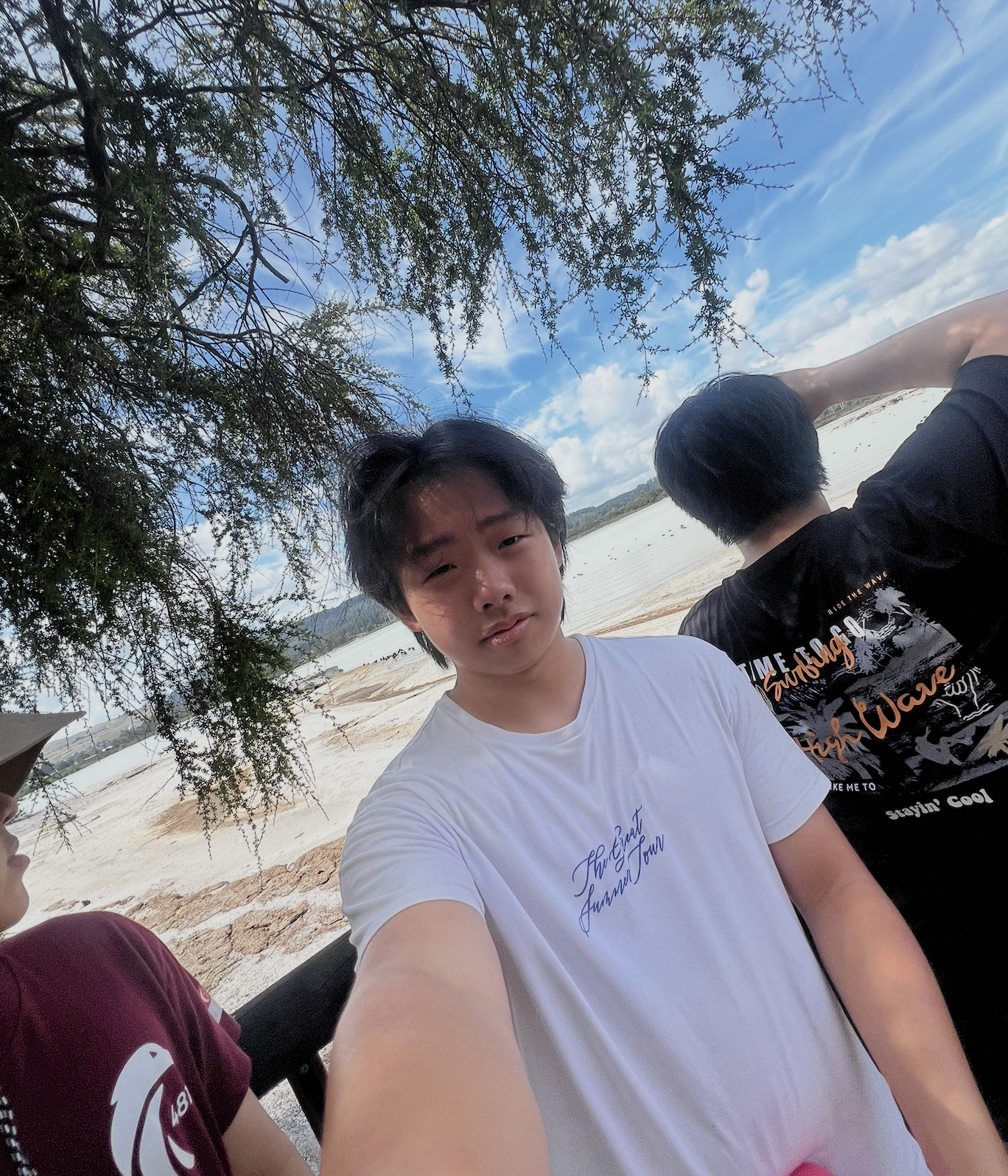
Niu Lai was not the most impressive cinematography I’ve seen. But to the young people of China, it’s a point of connection, unanimity, and hope for what their lives should be like. I saw this when the theater lit up in cheer and laughter when the viral clip of Niu Lai yelling for his mom came on. Even though I feel like I wasted eighty-six minutes of my life, to many, those eighty-six minutes represent something larger than just the movie. I may have not felt it myself, but I couldn’t help but smile for those in the theater who did.