My hands clenched around my phone as sweat dripped from my forehead, to my jersey, to the floor. My SAT scores were out, and the Wi-Fi at Australian International School was horrid. I wandered from spot to spot, holding my phone up as if that would help, watching the loading circle spin until the page gave up on me. When I finally found a bar of signal, my fingers slipped as I typed collegeboard.com, and I had to wipe them on my jersey and start over.
When I clicked the last button, the page took one more agonizing second to load.
Then the number I had been dreaming of beamed across my screen. For the rest of the day, I kept opening the page again, just to make sure it hadn’t changed.
The thing I remember most from that day is how happy my mom was. Her face lit up the second she saw me, and she pulled me into a big, sweaty, disgusting hug.
“Thank you,” she told me in Korean, assuring me that all my hard work had paid off.
Word travels fast in the Korean moms’ KakaoTalk group chats, and my score got out almost instantly. I figured they’d be impressed. Maybe even a little jealous.
A couple of days later, I was walking past the booster booth at school when I spotted a group of Korean moms standing beside it. I recognized every one of them. I’d known them since I was a little kid, and some of them had watched me grow up alongside their own kids. Without thinking, I started walking over, already smiling, a polite 안녕하세요 (Hello) ready on my tongue.
But as I got closer and closer, their voices got clearer, and I began to hear what they were saying.
“He’s not even stupid!”
Her voice carried. She turned to the mom beside her, who was already nodding.
“It’s so unfair, I could also bring my kid to the hospital and get him diagnosed with a fake condition.”
Fake. My hands, the same ones that had been clenched around my phone at AIS, went still.
“Right!? Extra time for kids is pointless, I wish they would stop being so lazy and work hard like our kids.”
Lazy? Is that what they thought of me?
“His score wasn’t even that good anyway,” one of them said, and they all started laughing.
I stared blankly in their direction. I felt a tingling sensation overcome my body as a rush of blood flowed into my head.
My stare slowly turned blurry as I mustered the strength to turn the other way and start walking.
My score, the one I was so proud of, came with an asterisk.
That was my extra time.
At first, I told myself it was just the moms. They were one group of judgmental parents, and what they said by the booster booth didn’t have to follow me anywhere else.
But once word got out that I had extra time, it started to.
After the midterm exam for calculus, my friends told me, “Nice, but you had extra time.”
As if my extra time invalidated my opinion of the exam. As if my extra time invalidated my score. As if the extra time had done the studying for me. As if it were my extra time—not me—that had sacrificed those Saturdays for mock exams, while all my friends hung out without me.
The scores I got from tests were supposed to feel like proof of everything I’d put in. Instead, it felt like I was failing tests before I even took them.
So, I decided to give it up.
During the most influential period of my life, I decided to omit the use of my extra time for tests. Instead of resisting the people who doubted the necessity of the extra time, I started agreeing with them. I wanted to prove, to myself more than anyone, that I didn’t need it. That it wasn’t a crutch. That I could just be a “normal kid” and leave this part of my identity behind. Without the extra time, I could finally show everyone I wasn’t just some stupid kid who needed extra time.
That I wasn’t just being lazy.
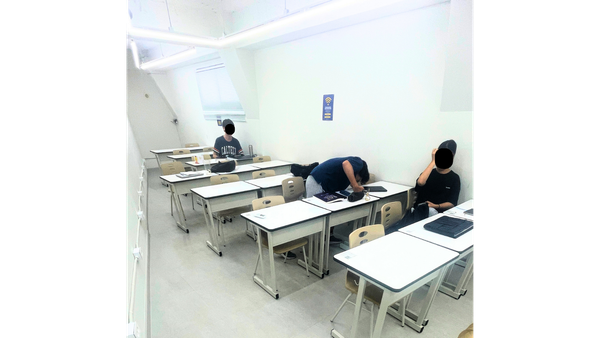
But in my first exam without extra time, I stared at the countdown looming at the top of my screen. The thirty minutes I expected to be left turned out to be less than five. I looked at my document. There was a full paragraph left, and it was the most important part of my essay.
I needed another thirty minutes.
My hands were trembling as I typed my final words, beginning the topic sentence for my last paragraph while the countdown swiftly approached zero. A flash of panic jittered my fingers, causing them to type a string of gibberish on my screen. That string of gibberish became the last “words” I typed before the exam turned itself in at exactly sixty minutes.
I stared blankly at the submission screen.
“Thank you for submitting your exam,” it said, as if my submission were at all worth thanking. Still staring, I contemplated asking Mr. Lambert for extra time. He knew I had accommodations and was expecting me to use them, but the promise I had made to myself kept me from standing up and asking for the continuation code.
But in that moment of panic, I threw away my desperate attempt at self-respect, and I walked with Mr. Lambert to the testing center.
I remembered a similar walk I had taken when I was younger. It happened to be right after my sixth-grade parent-teacher conferences, where my middle school teachers had spoiled my reputation as a student with constant remarks about my inability to sit still in class, my persistent behavioral issues, and the continual distractions I caused my classmates. I remember they recommended that I see somebody.
I was holding my mom’s hand, still wondering where we were going. The room we walked into was cold and colorless, with the shades covering the sunlight, and studio lights illuminating the area. I felt a droplet of water fall onto my hand, almost like a bead of sweat, even though my mom and I were both shivering. I looked upward, toward my mom’s face, but she was looking upward as well.
I soon realized it was another testing center, one that tested IQ and attention span. This time, I had no idea what I was supposed to have studied for.
I stared at the colored blocks placed in front of me. I was supposed to arrange them into a pattern. The tasks weren’t particularly difficult, but after so many of them, they got boring quickly. Still, I was determined to do well, to prove that I was still a smart kid.
A few weeks later, my mom and I sat in that same cold room while the doctor went through my results. I had thought they were testing how well I could arrange blocks or repeat number sequences. They weren’t. They had been watching me: my leg bouncing the whole test, my inability to stay in my chair for more than fifteen seconds. I had spent the entire test trying to prove I was smart, but being smart was never the question.
I didn’t understand most of the words the doctor used. But for the first time, everything my teachers had said about me had a name, and it wasn’t “lazy” or “a distraction.” It was the way my brain worked, not something I chose. When I looked up at my mom again, she was looking right back at me.
Years later, I was walking to another testing center, but this time I knew exactly what I had been studying for.
There, I finally wrote the paragraph I’d run out of time for, and I understood what the extra time had been doing all along. For everyone else in that classroom, sixty minutes was enough to show what they knew. For me, sixty minutes meant fighting the clock and my own brain at the same time. The extra time didn’t make the questions easier or hand me a single answer. It just let me show what I already knew.
I thought back to the moms at the booster booth. First I was too smart to need extra time. Then my score wasn’t even that good. There was no version of me that would have counted to them, not with extra time and not without it.
Still, there will be parents and kids who misunderstand my condition, who dismiss my achievements because of an accommodation, who see my extra time as unnecessary. No amount of explaining will change what they want to believe.
It may still sting every time I tell someone I have extra time. But the relief I felt when I checked my score in that sweaty jersey is still mine. They could never take it away. For a while, I almost handed it straight to the people whose opinion shouldn’t matter at all.